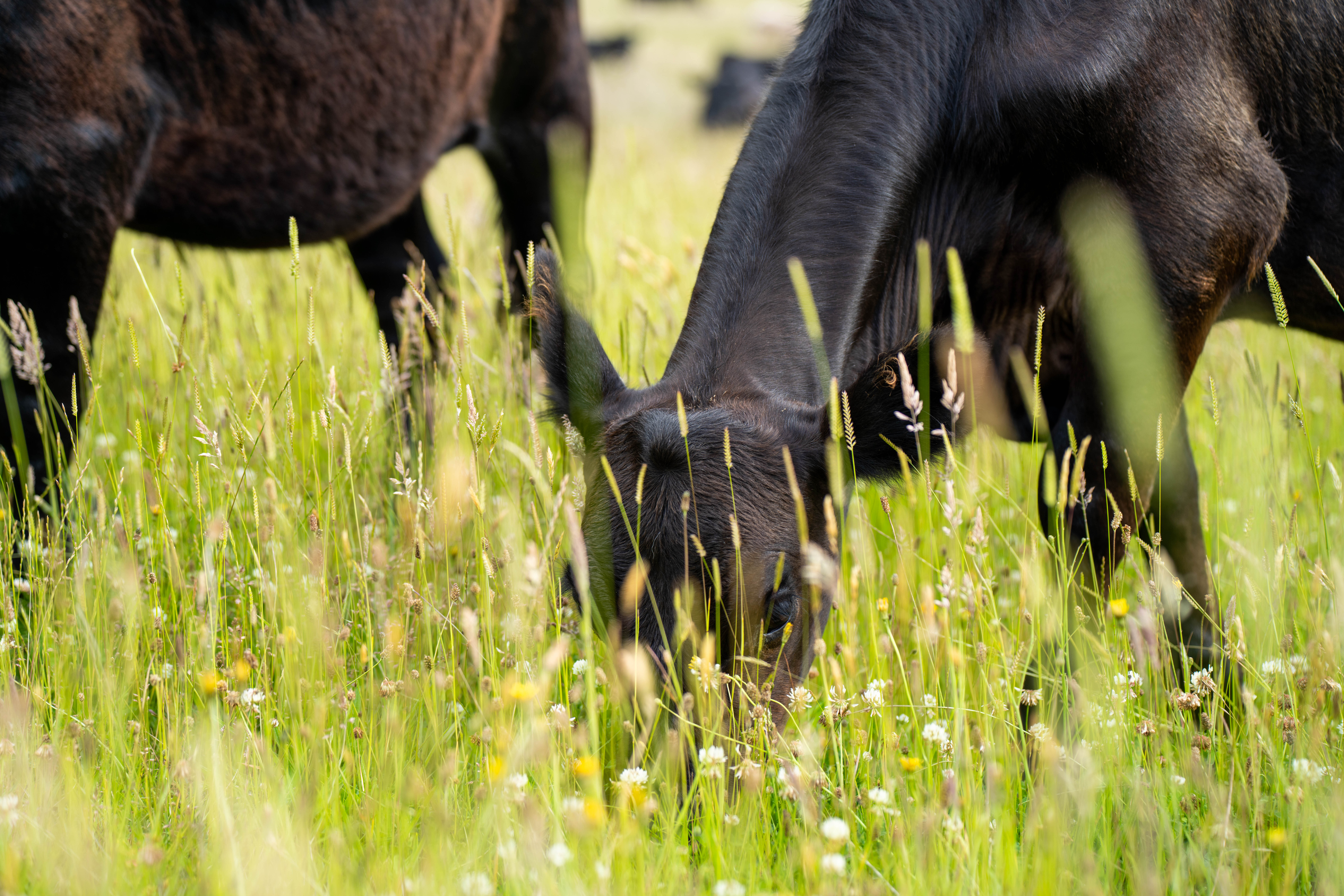
There was a time when planting pastures was simple. Plant one thing, hope it rains and try not to think too hard about August.
Unfortunately, Missouri summers, rising costs and grazing pressure have a way of exposing weak forage systems in a hurry. That is one reason more producers are turning toward mixed forage stands instead of relying on a single species to carry the entire load.
As it turns out, diversity is not just good for retirement portfolios and church potlucks. It works pretty well in forage systems, too.
Different Plants Do Different Jobs
One of the biggest advantages of mixed forage stands is that plants are not all pulling from the same place in the soil profile or growing on the exact same schedule.
Cool-season grasses like fescue tend to dominate in spring and fall, while warm-season annuals pick up steam once temperatures rise. Legumes contribute nitrogen and improve forage quality. Deep-rooted species help pull moisture from lower soil layers during dry stretches, while fibrous-rooted grasses help hold soil structure together closer to the surface.
When one species slows down, another often keeps growing. That matters during years when rainfall decides to skip town for six weeks.
A pasture built with diversity spreads production risk across the growing season instead of putting all its faith in one crop and a weather forecast written by somebody sitting in an air-conditioned office four counties away.
Legumes Put in the Work
Legumes are often viewed mainly as a protein source, but they bring considerably more to the table than that.
Products like Synergy Ladino Clover or Stamina White Clover can help increase forage quality while also contributing nitrogen back into the system. That can reduce dependence on commercial nitrogen applications over time, especially in rotational grazing systems where manure distribution is more uniform.
Legumes also tend to maintain forage quality longer into maturity compared to many grasses. That helps support intake and animal performance during periods when cool-season grasses begin losing feed value.
And cattle usually know the difference. They rarely march straight past clover unless someone leaves a gate open.
Below the Surface
Mixed stands also create a wider range of root structures underground, which plays a major role in pasture resilience.
Fibrous-rooted grasses improve soil aggregation and erosion control. Tap-rooted legumes like Crimson Clover can improve water infiltration and help relieve surface compaction. Some warm-season annuals like Defiance Sorghum Sudangrass create aggressive root systems capable of scavenging nutrients deeper in the soil profile. That becomes especially valuable in variable soils where one side of the field acts like a sponge, and the other side resembles a concrete parking lot by mid-July.
Including species with different rooting depths can also improve drought tolerance by spreading water demand throughout the soil profile, rather than concentrating it all in the top few inches.
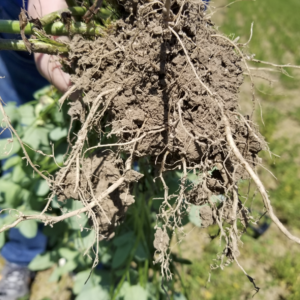
Q Red Clover root system.
Grazing Pressure Changes Everything
A forage mix that looks great in a brochure may not survive a real grazing program if the species are not compatible.
Under grazing pressure, plant recovery speed matters just as much as yield potential. Species that recover quickly after defoliation help maintain stand persistence and reduce bare ground. That is one reason many producers incorporate resilient warm-season annuals alongside perennial base pastures.
For example, Surpass BMR6 Sorghum Sudangrass offers rapid summer growth with improved digestibility from BMR traits, making it a strong option for rotational grazing or emergency summer forage. Defiance Sorghum Sudangrass brings additional Sugarcane Aphid tolerance, which becomes increasingly important during hot summer conditions when aphid pressure tends to explode right about the time hay equipment is already broken down somewhere inconvenient.
Meanwhile, products like Laredo Haybeans can complement grass systems by adding high-protein forage and additional tonnage during summer production slumps. The goal is not necessarily finding the “perfect” species. It’s building a system where different plants cover for each other when conditions turn less than ideal.
Seasonal Distribution Matters
One of the most overlooked benefits of mixed forage systems is improved seasonal distribution.
Many operations experience a flush of spring growth followed by a steep decline during summer heat. Mixed stands help smooth out those production swings by combining species that peak at different times.
Cool-season perennials provide early grazing. Warm-season annuals carry production through summer. Legumes help maintain forage quality across both windows. The result is often more grazing days, reduced supplemental feeding and better overall pasture utilization.
That does not mean mixed stands eliminate management challenges. They still require fertility planning, grazing management and realistic expectations. A diverse stand cannot fix continuous overgrazing any more than buying a new pickup fixes a bad fence.
But properly managed forage diversity can significantly improve resilience, productivity and forage quality over time.
Building a Better System
The best forage systems are rarely built around a single species doing all the work. They function more like a team, with different plants contributing at different times and under different conditions.
That is especially important in environments where weather patterns, input costs and forage demands rarely stay predictable for long.
Missouri Southern Seed offers a wide range of forage products designed to help producers build those systems, whether the goal is improving grazing pressure tolerance, increasing summer production, boosting forage quality or strengthening pasture resilience across changing conditions. Give us a call today, and let’s talk about what mix will work for your operation.
