Every year, new cover crop products promise bigger roots, better soil and improved performance. Some live up to the hype, and some…well, let’s just say they look a lot better in the sales brochure than they do in the field. That’s why we like to let the results do the talking.
After its first full year on the market, TapIt Hybrid Brassica has generated plenty of conversations among growers, dealers and researchers alike. More importantly, it has generated results. From Michigan to Florida, producers have been putting TapIt to work in a wide range of conditions, and one thing has become clear: this isn’t simply another brassica with a different label on the bag.
Proving its Performance
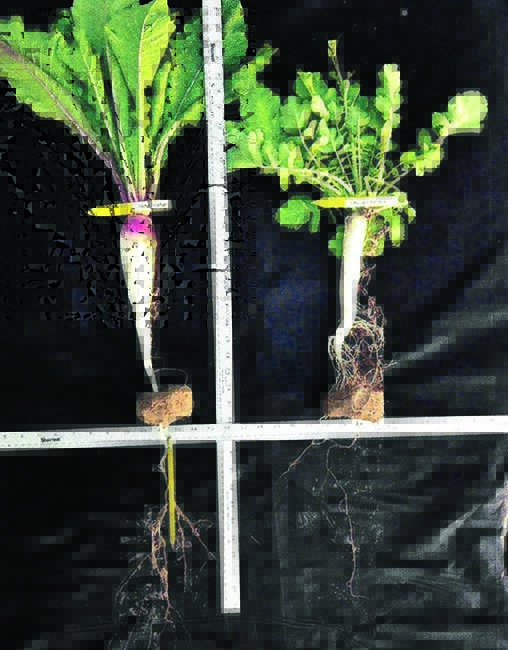
One of the biggest advantages growers have noticed is TapIt’s ability to reduce soil compaction. Traditional Daikon radishes have long been promoted for their ability to punch through hardpan, but anyone who has dug enough roots knows that doesn’t always happen. When conditions aren’t right, roots can “J-hook” or even push themselves back out of the ground instead of penetrating compacted layers. TapIt’s proprietary root structure was developed to solve that problem, and in field after field, it has done exactly that. Growers consistently reported roots driving straight through compacted soil, creating channels that improve water infiltration, encourage deeper crop rooting and help build healthier soils over time. As one producer put it, “It actually does what people think Daikons are supposed to do.”
Above ground, TapIt offers another advantage that often gets overlooked until you’ve planted a diverse cover crop mix. Many brassicas and radishes grow wide, leafy canopies that quickly shade neighboring species. That can reduce stand establishment and limit the benefits you’re hoping to gain from a multi-species mix. TapIt was developed with an upright leaf architecture that allows sunlight to reach companion crops rather than crowding them out. One producer who planted TapIt with annual ryegrass noted there was virtually no shading, excellent forage production and joked that although he seeded only two pounds per acre, “it looks like four.” That’s the kind of compliment that comes from walking the field instead of reading a research summary.
Weather also tested TapIt’s performance throughout the year. Cold temperatures that would typically end the growing season for other brassicas proved less of a challenge. With snow cover, TapIt survived temperatures as low as -9°F, while growers reported positive performance even at temperatures around 5°F without snow. That additional cold tolerance extends the period when roots continue improving soil structure and allows producers to capture more value from every acre planted.
Diverse Applications
Although TapIt was designed as a cover crop, it fits well into several other production systems. In forage applications, the upright growth habit allows grasses and companion species to continue thriving without being shaded. The deep root system naturally aerates the soil while improving water and manure infiltration, creating conditions that encourage healthier pasture growth. Unlike large Daikon radishes, the narrower root channels also reduce concerns about livestock stepping into oversized holes after the crop has winter-killed.
Wildlife managers have also found plenty to like. Deer have consistently shown a preference for grazing TapIt, making it an excellent addition to fall food plots. Rapid germination provides quick attraction, while the high-quality forage helps support body condition and antler development throughout the season. It’s one more example of how a product developed for soil health can provide value in other areas as well.
After one growing season, it’s still early in TapIt’s story, but the first chapter has been encouraging. Growers have seen stronger performance in compacted soils, better compatibility in cover crop mixtures, impressive cold tolerance and quality forage production across multiple applications. Add in the ongoing research surrounding its unique genetics, and it’s clear there’s more to learn about what this hybrid brassica can offer.
At Missouri Southern Seed, we believe products should earn their reputation one field at a time. Based on what we’ve seen during year one, TapIt is off to a pretty good start.
