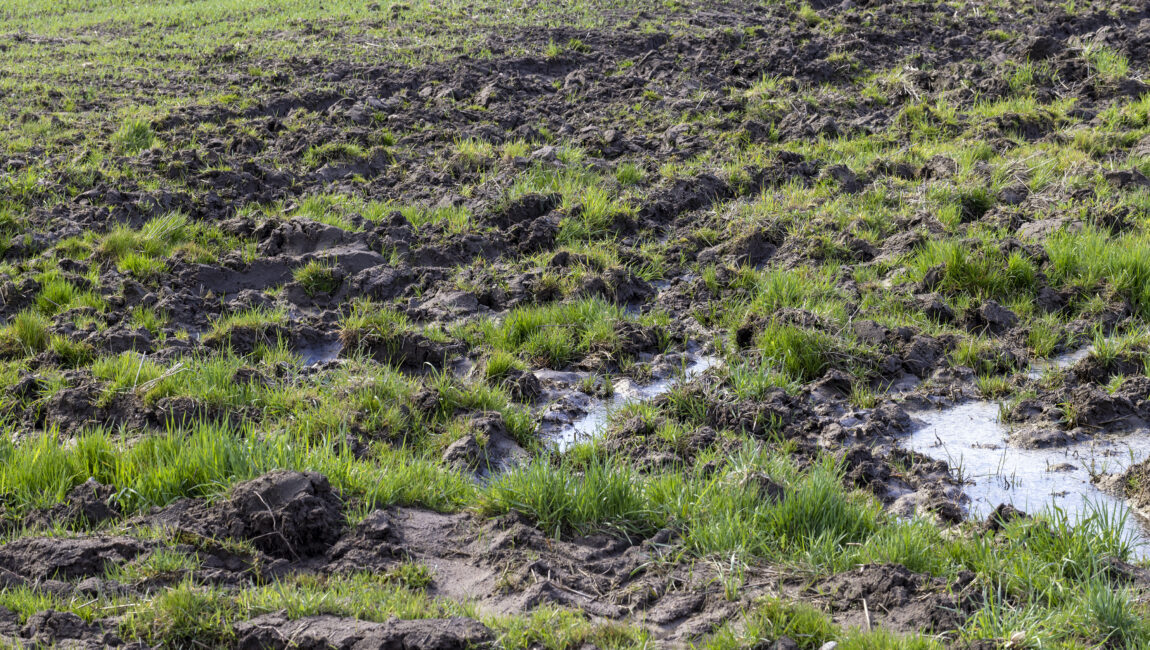
Spring is soon upon us, and you will be taking stock of the condition of your pastures. Bare ground has a way of showing itself this time of year, whether it is caused by mud and compaction, overgrazing or forages that just never really took off. That is when many producers start asking the same question: “Can these areas be fixed with overseeding and patching, or is a full renovation the smarter move?” Here’s how how to evaluate pasture conditions with a clear head and a realistic eye.
Take an Honest Look
Before deciding what seed to buy, take time to assess what is actually growing. Look past early green up and focus on plant density, species present, and overall vigor. A pasture that still has a solid base of desirable forage, even if it looks a little rough around the edges, may be a good candidate for patching. On the other hand, if weeds, annual grasses, or bare soil are doing most of the growing, patching may only make things look better for a season.
Tools like the NRCS Pasture Condition Scoring Sheet can help take some of the guesswork out of the process. It is a useful way to evaluate pasture health without relying on hope, optimism, or how green it looks from the road.
A simple field check also goes a long way. Look at how evenly forage plants are spaced and whether crowns and roots are healthy. If productive species are still well distributed and capable of filling in, the pasture likely has some fight left in it.
When Patching Makes Sense
Patching with frost seeding or overseeding can be an effective and economical option when most of the pasture is still doing its job. Thin areas caused by winter feeding, livestock traffic or last year’s weather are often good candidates. If soil structure is intact, drainage is decent and grazing can be managed to give seedlings a chance, patching can stretch pasture life without breaking the budget.
It is worth remembering that patching is meant to improve what is already there, not perform miracles. Overseeding a pasture with compaction, drainage issues or nonstop grazing pressure is a bit like painting a pickup with a bad transmission. It might look better for a while, but the problem is still under the hood.
When It’s Time to Renovate
There are times when patching simply does not pencil out. Fields with long-term compaction, poor drainage or chronic weed pressure are unlikely to respond well to overseeding alone. If the pasture has been limping along for years, renovation may be the reset it needs.
Some clear indicators suggest it may be time to start over rather than patch. These include low forage yield that no longer meets livestock needs, weeds dominating more than half the stand, visible bare ground or erosion and a desire to shift to a new or improved forage system. When several of these show up together, renovation usually offers a better return than another round of overseeding.
Renovation also makes sense when goals have changed. If you want to introduce a different forage species, improve overall productivity or better match forage to livestock needs, starting fresh can be the most effective path forward.
Timing Matters
When renovation is the plan, timing plays a big role in success. For cool-season grasses and legumes like fescue, orchardgrass and clovers, late summer into early fall is generally the best window. Soil is warm, moisture is more reliable and weed pressure is lower. Planting about six to eight weeks before a killing frost gives seedlings time to establish strong roots before winter.
Spring seeding can work, especially if fall was missed, but it usually comes with more competition from weeds and added stress from summer heat. Warm-season forages like bermudagrass are better suited for late spring to early summer planting once soil temperatures consistently reach 60 degrees or higher.
Making the Right Call
Every pasture reaches a point where it needs attention, but not every pasture needs to be torn up. Some can be improved with targeted patching, while others benefit from starting fresh. The key is honest evaluation, realistic expectations and fixing the root causes before investing in seed. When those pieces are in place, both patching and renovation can be effective tools for keeping pastures productive.
