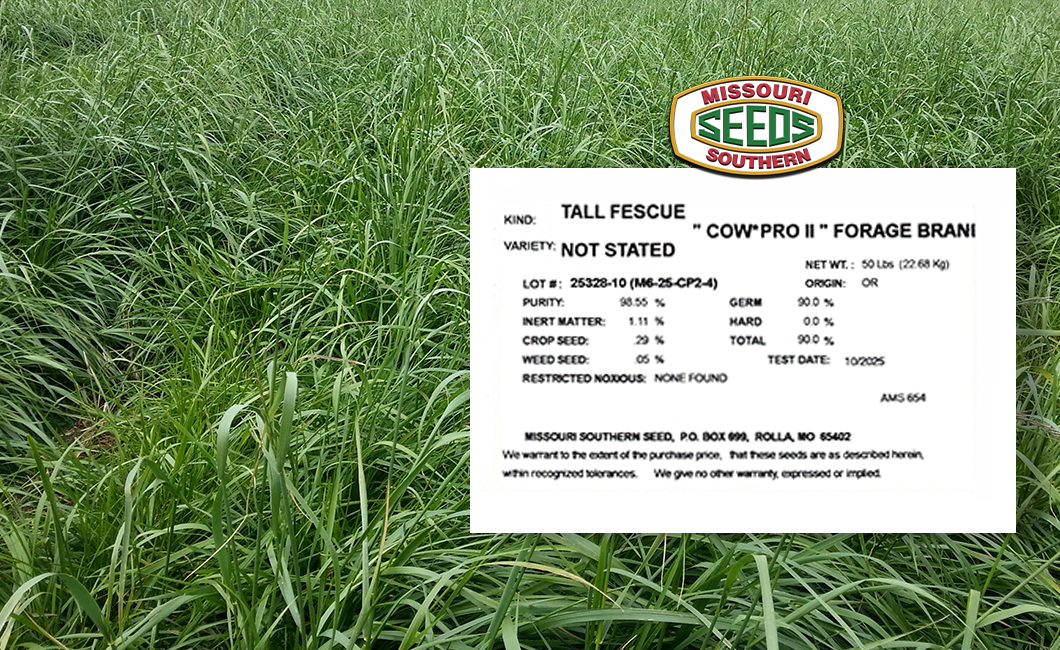
Choosing and buying seed might sound simple: you buy a bag, you plant it and it grows. But not all seed is created equal. In reality, some seed will take off the moment it hits moisture, and some seed will sit there like it is waiting for a written invitation. This quick guide is so you do not need a degree in plant science to separate the good seed from the poor quality. Choosing high-quality seed is the difference between a field that produces forage and one that looks like it survived a locust plague.
If you want a productive pasture, it starts with the basics. Here are the top three things to look for in quality seed.
1. Read the Label
Seed labels are the fine print of farming. They contain all the numbers and percentages you actually need. Starting with the germination rate. This tells you the percentage of seeds expected to sprout under ideal conditions. A 90 percent germination rate means most of your seeds will grow. Anything lower is a roll of the dice.
Next, check purity and weed content. Purity tells you how much of the bag is actually the seed you paid for. Weed content is listed separately, and high numbers here usually mean a headache later. Weeds can compete with seedlings, slow establishment and make your pasture look like a long-term field experiment.
Germination rates are only part of the story. Some seeds, especially legumes and perennials, may have dormancy factors. That means even high-quality seeds may sit in the soil for a while before sprouting. Knowing your seed’s dormancy and proper planting windows gives you a better shot at a uniform stand and fewer gray hairs.
Here are the core parts of a seed label and why they matter:
- Kind and Variety: Tells you what species and specific cultivar you are planting.
- Lot Number: Useful for tracking seed if questions ever come up.
- Origin: Where the seed was grown. Climate and soils can influence quality.
- Net Weight: How much product you are actually buying.
- Percent Pure Seed: How much of the bag is the real deal.
- Percent Inert Matter: Plant debris or non-seed material. Lower is better.
- Percent Other Crop Seeds: Non-weed seeds that ended up in the batch.
- Percent Weed Seeds: Anything classified as a weed. Avoid high numbers here.
- Germination Percent: The number that tells you how much should sprout.
- Hard Seed: Seed that will not germinate right away because of a tough coat.
- Dormant Seed: Seed that requires weathering or time before germinating.
- Germination Test Date. Should be within 12 months of planting.
Understanding these pieces helps you make a better investment. Quality seed starts with quality information.
2. Look for Testing
Testing is one of the simplest ways to know what you’re actually planting. A lot can vary from year to year, even within the same seed variety. Missouri, like many states, has seed testing programs that follow rules set by the Association of Official Seed Analysts. These labs help make sure the numbers on the label are accurate and that you know what you are buying.
Certified or lab-tested seed gives you confidence that what you’re paying for is what you’ll get in the field. Even if a bag looks good, testing ensures you know your germination rates, purity and any potential weed issues before it goes in the ground. It turns planting season from a guessing game into a plan.
3. Storage Matters
Seed quality does not stop at the register. Even the best seed can lose its punch if it is stored poorly. Heat, moisture and time are the enemy. Store your seed in a cool, dry place, away from direct sunlight, and keep it off the floor to avoid damp spots. Humidity can cause mold or rot, while heat can kill dormant seeds before they even get a chance to grow.
If you are storing seed for more than a few weeks, consider using airtight containers or sealed bags and check occasionally for moisture or pests. Treat your seed like it is gold because, in terms of pasture productivity, it basically is.
For a full guide on proper seed storage, check out our detailed article, Keeping It Fresh: How to Properly Store Seeds. Following these tips ensures your seed stays viable until it hits the field, giving your pasture the best possible start.
4. Know Your Supplier
When it comes to seed, the right supplier matters more than the lowest price tag. Missouri Southern Seed has decades of experience providing high-quality forage, cover crop and wildlife seed. A reliable supplier can answer questions about germination, purity, testing and the best planting strategies for your specific field. If your supplier acts like you are asking too many questions, take it as a warning sign. A reputable supplier wants you to succeed because their reputation grows along with your pasture.
High-quality seed sets the foundation for a productive pasture, hay field or cover crop. Know your germination rates, check purity, understand dormancy, buy from reputable suppliers and store it properly. Skipping these steps might save a few dollars today, but it could cost you a season of growth and a lot of frustration.
Missouri Southern Seed carries tested, reliable seed options that make overseeding, frost seeding or starting a new pasture less stressful. For advice on selecting the right seed and ensuring your fields get the right start, give us a call at 1-800-844-1336.
